

Sunday 1 November 2026 – 23:42
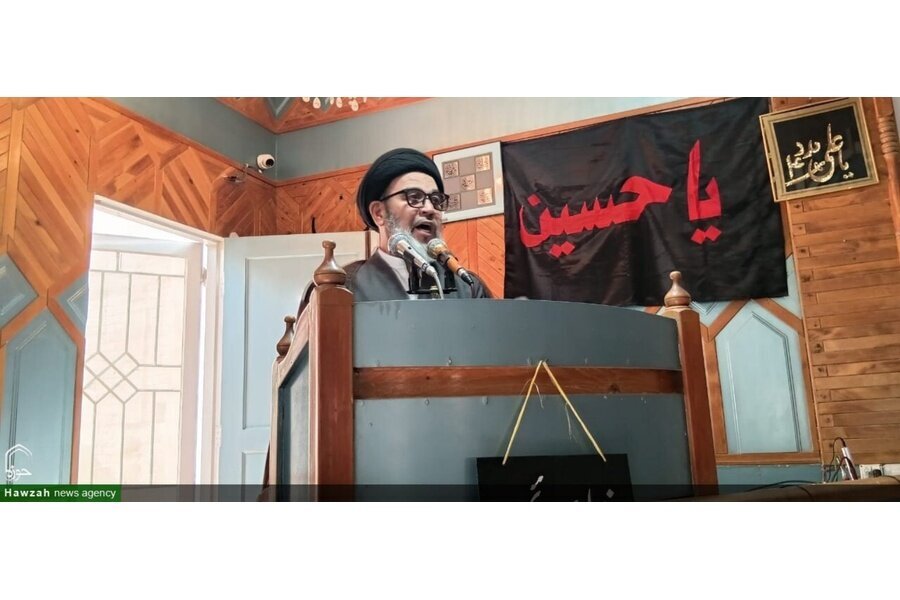
Quetta Friday Imam: Unity, Cooperation Key to Solving Muslim World’s Problems
Hojatoleslam Seyyed Hashem Mousavi, the Friday prayer leader of Quetta, Pakistan, has called on Muslim countries to seize the initiative and rely on shared capacities and strengthened cooperation to solve the problems facing the Islamic world.
Speaking during Friday prayers at the Grand Mosque of Quetta, Mousavi said Muslim nations must take the initiative to address the challenges facing the Islamic Ummah through mutual cooperation, unity, solidarity, and joint strategies.
Lady Fatima’s (AS) Conduct a Prominent Model of Jihad of Clarification
In his first sermon, the Quetta Friday prayer leader described the “Jihad of clarification” as one of the most prominent dimensions of Lady Fatima Zahra’s (AS) conduct, saying she made great sacrifices to defend truth and justice and protect Islam.
Referring to the oppression of Lady Fatima (AS) and the martyrdom of her son Mohsen (AS), he said her sacrifices in defending truth, the reality of Islam, and the need to protect it have been immortalized in history.
Mousavi added that Lady Fatima’s (AS) conduct remains a clear model for defending truth, raising religious awareness, and clarifying reality against deviations. Muslims must study the various dimensions of her life and benefit from her teachings in safeguarding Islamic values.
Unity of Islamic Countries the Solution
Mousavi said Islamic countries are gradually realizing that they must take the initiative to solve their problems and challenges and move toward cooperation and convergence based on shared capacities.
He stressed that solving the problems of the Islamic Ummah depends on mutual cooperation, unity, solidarity, and joint strategies among Muslim countries. Strengthening relations and expanding political and regional cooperation can therefore pave the way for more effective confrontation with the challenges facing the Islamic world.
Israeli Regime’s Internal Turmoil and Signs of Political Instability
In the final part of his remarks, Mousavi referred to elections and internal political developments in the Israeli regime, describing its situation as unstable. He said the current conditions and internal political disputes could pave the way for intensified crisis and weakening of the regime’s structure.
He described the Israeli regime’s internal instability as a sign of the crises ahead and suggested that the continuation of this situation could pave the way for its decline and collapse in the future.

Majid Poustchian

