

Monday 2 November 2026 – 12:44
Why We Should Not Use the Term “Houthis” for the Yemeni People
The repeated use of the label “Houthis” in international media has gradually turned the name into a substitute for identifying the Yemeni people, political institutions, and military forces—an approach that goes beyond a mere lexical choice and shapes how audiences perceive the country and its developments.
Hawzah News Agency- In the war of narratives, words are sometimes changed before facts are distorted. A seemingly simple choice of label can create a different image of a country, a nation, and its political developments in the audience’s mind. One noteworthy example appears in media coverage of Yemen, where some media outlets and political officials use the term “Houthis” instead of labels such as “the Yemeni government,” “the Yemeni people,” or “the Yemeni armed forces”—as if an entire country and society could be summed up in the name of one political movement.
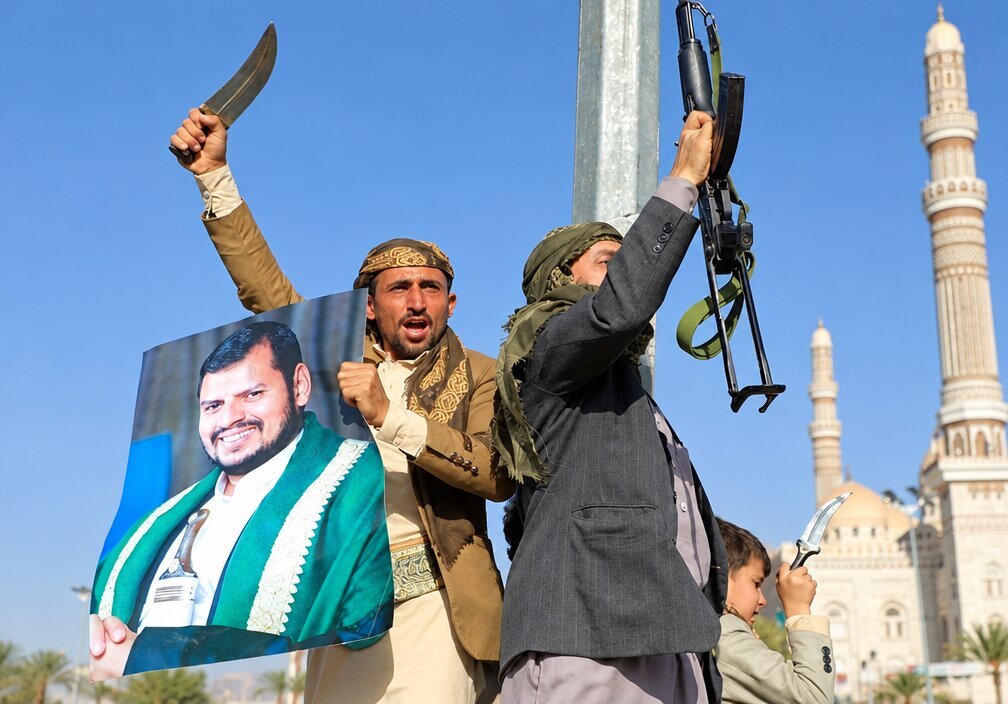
This naming practice is particularly pronounced in coverage of Yemen’s positions on Palestine, the Gaza war, confrontation with the Zionist regime, and Red Sea developments. In many reports, actions announced or carried out by the Yemeni armed forces are reflected with phrases like “the Houthis threatened” or “the Houthis targeted ships”—even though the subject under discussion is, in many cases, the official position of institutions based in Sanaa or operations of the country’s armed forces.
The term “Houthi” derives from the family name of Hussein Badr al-Din al-Houthi, founder of the Ansarullah movement, and is used in historical and political literature to refer to this movement. Therefore, using this label to identify the specific Ansarullah movement is neither incorrect nor insulting. The problem arises when the term replaces the name of a country, its people, or its governmental institutions—and all Yemeni developments are attributed to a single political movement.
One consequence of this naming is the reduction of a political and social movement to a family name. Over the years, Ansarullah has evolved into a movement with a political structure, organization, viewpoints, and a social base. The continuous use of the label “Houthis,” especially when it replaces the movement’s name, can create the impression that we are dealing with a limited group tied to one family—rather than a political movement that has played an effective role in Yemen’s developments over recent decades. This naming practice obscures from the audience the complexities of the movement’s formation and expansion and the social contexts of its presence.
On the other hand, words do not always carry the same semantic weight in the media space. The label “Houthis” may be used in some reports merely to refer to Ansarullah, but its combination with expressions like “Houthi militias” or its repetition alongside negative terms can turn it into a tool for labeling and shaping a negative image of this movement. In such a narrative, before the audience becomes familiar with a movement’s positions, performance, and reasons, a kind of judgment about it is formed in their mind.
Another point is the impact of this language on how Ansarullah’s social base is represented. When a movement is continuously introduced by its founder’s family name, the impression may arise that its activity and influence depend solely on a family circle or a limited group—whereas understanding any political movement’s standing requires attention to its background, structure, supporters, and social contexts. This does not mean all Yemenis share Ansarullah’s views, just as opposition to the movement by part of society cannot be ignored.
The spread of this label in Western media and some Arab outlets has also contributed to cementing such an image. When a term becomes the dominant word in news coverage of a crisis, other media may repeat the same pattern—even if more precise labels exist to describe the event or institution in question. In this way, a lexical choice gradually becomes a common framework for narrating developments—a framework that does not necessarily reflect all dimensions of reality.
Of course, a distinction must be made between different uses of the term. If the news subject is specifically a position or action of the Ansarullah movement, using the movement’s name or its known label is understandable. But if the news concerns the Yemeni people, the governmental institutions based in Sanaa, or the country’s armed forces, replacing all these labels with “Houthis” reduces media accuracy.

Majid Poustchian

