
Nov 5, 2026, 4:26 PM
By: Mohsen Pak Aein
Iran’s victory in the United States
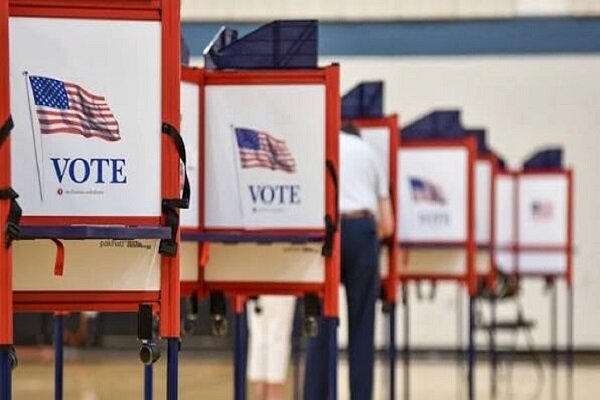
TEHRAN, Nov. 05 (MNA) – In the 2026 U.S. midterm elections, held on Tuesday, November 3, the Republican Party suffered a heavy defeat, and the Democrats gained control of Congress—both the House of Representatives and the Senate.
Most global media outlets, particularly those in the United States, identified U.S. President Donald Trump’s unprovoked aggression against Iran as the primary reason for the Republican defeat, explicitly stating that Iran was the key factor behind the Democrats’ victory. Following his party’s defeat, Donald Trump—while attempting to avoid appearing weak—sent a congratulatory message to the Democrats, acknowledging that the war with Iran had contributed to his party’s failure. He further alluded to the potential use of his veto power against Democratic initiatives, adding that the conclusion of the war with Iran ultimately rests on his personal decision. Regarding this situation and Iran’s future approach, several points should be noted:
1. There is no doubt that the courageous and astute guidance of the Leader of the Islamic Revolution, the resistance of the valiant Iranian people against the aggression of the United States and the Zionist regime, the preservation of national unity and social cohesion,—the bold authority demonstrated by Iran’s armed forces on the battlefronts (notably the intelligent management of the Strait of Hormuz), and the strategic coordination among the three branches of system and the powerful armed forces, all contributed to the enemy’s defeat and intensified the American public’s aversion toward Trump, both within the United States and abroad. The assertion that Iran emerged victorious within the United States itself is a precise and indisputable point. While Western media—particularly those affiliated with the Republican Party—attribute the defeat to factors such as economic discontent, rising living costs (driven by fuel prices), high Democratic voter turnout, and a decline in Trump’s popularity, the reality is that all these issues—economic dissatisfaction, increased living costs, the erosion of Trump’s standing, and so forth—stem directly from the U.S. aggression against Iran. Had this war not occurred, it is quite possible that the Republicans would have emerged as the victors in the election.
2. One should not hastily assume that a Democratic victory signifies a fundamental shift in U.S. policy toward Iran; a clear distinction must be drawn between the Democrats’ opposition to the continuation of the war and any notion of support for the interests of the Islamic Republic. Political developments in 2026 indicate that opposition to the war with Iran among Democrats is substantial; on June 3, 2026, the House of Representatives voted 215 to 208 in favor of a resolution to limit Trump’s war powers. In a February 2026 poll by the Chicago Council on Global Affairs regarding U.S. policy toward Iran, 85% of Democrats supported reaching a diplomatic agreement to end the conflict, while only 28 % favored airstrikes against Iran’s nuclear facilities. These figures highlight the significant divide between the two parties concerning the use of military force against Iran. However, these sentiments do not necessarily guarantee an end to the conflict; Donald Trump remains the Commander-in-Chief and might engage in new acts of aggression to mask his party’s defeat. Consequently, it is essential for the armed forces to maintain a robust state of readiness to counter any potential U.S. aggression.
3. Although Democrats oppose the use of U.S. military force against Iran, their views align with those of the Republicans regarding how to address Iran’s nuclear program, the lifting of oppressive sanctions, and the provision of financial concessions to Tehran. In essence, while both parties share concerns regarding Iran’s regional power and nuclear program, they differ on the appropriate approach for dealing with the country. Furthermore, both parties share common ground on several key issues: ensuring the security of the Zionist regime; countering the “Axis of Resistance” to limit Iran’s regional influence; securing U.S. strategic interests in West Asia; maintaining economic leverage over Tehran; supporting regional allies; and ensuring the Strait of Hormuz remains unblocked.
4. From now until the 2028 U.S. presidential election, both parties will strive to attract more supporters to secure victory. In this context, the approach taken toward Iran will serve as a significant and decisive factor in the presidential race. The Democratic Party will likely seek to maintain its anti-war stance, continuing to frame the aggression by Trump and the Zionist regime against Iran as the primary cause of rising fuel prices and America’s economic hardships. Meanwhile, Republicans—gradually distancing themselves from Trump—will likely attribute any military strike on Iran and its subsequent repercussions to Trump’s policies, thereby positioning the Republican Party as opposed to war. By grooming a moderate figure—such as J.D. Vance, the current U.S. Vice President—the party may attempt to persuade the American public to reconsider its hawkish policies. This situation could present an opportunity for Iranian diplomacy to leverage the country’s military strength and popular support to take the necessary measures to secure its national interests.
MNA

