

Sunday 1 November 2026 – 17:30
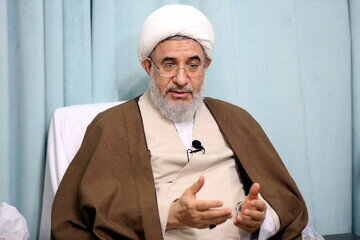
Ayatollah Araki: Iran Should Quit NPT, Use Hormuz as Leverage
Ayatollah Mohsen Araki, a member of Iran’s Assembly of Experts, has called for a review of Iran’s membership in the Nuclear Non-Proliferation Treaty (NPT), saying that after nearly three decades of compliance, the Islamic Republic has gained none of the promised benefits while suffering heavy losses. He urged that the demand to withdraw from the treaty become a public call at nightly gatherings across the country.
Hawzah News Agency- Speaking at the start of his advanced jurisprudence class, Ayatollah Araki said one of the key demands that should be raised at popular nightly gatherings nationwide is for officials to reconsider Iran’s continued membership in the NPT.
The member of the Supreme Council of Seminaries added that Iran has suffered numerous blows due to its membership and continued compliance with the treaty, while gaining no commensurate benefit. He said officials must review continued membership in light of the experience gained.
Promised Nuclear Technology Benefits Never Materialized
Ayatollah Araki, who also serves on the Expediency Council and as a member of the Assembly of Experts’ presiding board, noted that when Iran first joined the NPT, it was said that membership and a commitment not to pursue nuclear weapons would bring support from member states and international bodies, along with advantages for developing Iran’s nuclear industry.
He said that after nearly three decades, it must be examined how many of those promises were implemented and what the country actually gained. “Experience has shown that Iran not only failed to receive the expected support, but the very institutions responsible for overseeing treaty obligations and supporting member states have in many cases paved the way for pressure and harm against Iran,” he said.
International Bodies Gave Iran’s Nuclear Data to the Enemy
Ayatollah Araki said these bodies not only failed to protect Iran’s rights but dealt heavy blows to the country. “The first issue was the collection of information and inspections that ultimately handed sensitive data to the enemy. These bodies also pursued resolutions of condemnation against Iran under various pretexts, paving the way for intensified sanctions and international pressure,” he said.
He added that the process eventually led to attacks and bombardment of Iran’s nuclear facilities, despite the expectation that NPT membership and cooperation with international bodies would at least provide protection against such aggression.
Referring to claims by the opposing side about the extent of damage to Iran’s nuclear facilities, Ayatollah Araki said: “They themselves claim they bombed Iran’s nuclear facilities so thoroughly that nothing remains. If, by their own admission, nothing remains, the question is: what justification is there for Iran’s continued membership in the NPT, and what benefit will it bring?”
Western Double Standards on Iran and Israel
Ayatollah Araki recounted a memory of an interview with a British Foreign Office official during a period of heightened pressure for inspections of Iran’s nuclear sites. He said a journalist asked the British official why Iran was being pressured and sanctioned over alleged non-compliance while Israel possesses nuclear weapons and is not even an NPT member.
The journalist also noted that Iran is an NPT member, has cooperated with relevant bodies, and has allowed inspections—so why pressure Iran while remaining silent on Israel, which is outside the treaty and possesses nuclear weapons?
Ayatollah Araki said the British official’s response was: “We pressure Iran because it is a member of this treaty and has signed it and must adhere to its obligations, while the Israeli regime is not a member.”
“This explicit answer is a clear example of the contradiction and double standards in the behavior of some Western countries—where membership and acceptance of international obligations become a tool for pressure on a country like Iran, while no similar approach is taken toward a regime outside the treaty that possesses nuclear capabilities,” Ayatollah Araki said.
Continued Membership in a Treaty With No Benefits Requires Review
Ayatollah Araki asked whether, given this experience, continued NPT membership has sufficient logic and justification. “Today we must truly ask ourselves whether reason and logic accept remaining in a treaty that has not only brought no benefit but has inflicted widespread losses on the Iranian nation,” he said.
He added that what has happened over these years shows that continued presence in the treaty without the foreseen benefits and protections could harm the people and national interests. Officials must therefore carefully examine past experience and current conditions and decide on a review of Iran’s continued membership.
Call to Make NPT Withdrawal a Public Demand
Ayatollah Araki stressed the need to turn the issue into a public demand, saying: “We expect popular nightly gatherings anywhere in the country to place this demand on their agenda and ask officials to reconsider Iran’s continued membership in the NPT.”
He said the demand to leave the treaty must become a public, popular call, because the reason is clear: continued membership has brought heavy losses without significant benefit to the Iranian nation. “The people must seriously demand this from the government and officials at their nightly gatherings so that a review of Iran’s continued NPT membership is undertaken,” he said.
Officials and Fighters Must Not Retreat on Strait of Hormuz
Ayatollah Araki highlighted the strategic position of the Strait of Hormuz in global economic and political equations, saying: “Today the key to the global economy is in the hands of the Islamic Republic of Iran and our fighters, and that key is the Strait of Hormuz—the very capacity many countries sought to solve their problems, whose importance and position are now clear.”
He said the strait has become one of the most important strategic levers in global equations and can play a decisive role in resolving issues that have remained unresolved internationally for years.
Ayatollah Araki stressed the need for coordination between government officials and fighters with the guidelines of the Supreme Leader, saying: “We expect officials and fighters to fully follow the Supreme Leader’s orders and guidelines and not retreat on the Strait of Hormuz in any way.”
He cited the Supreme Leader’s emphasis that the Strait of Hormuz should not be reopened unless all demands of the Islamic Republic are fully and completely met. “We can even go beyond previous demands, because the opposing side now faces more limitations and pressures. Seven demands were previously raised in agreements and negotiations, but now, given new conditions and increased economic pressure and rising oil prices, the opposing side will be forced to gradually reach a point where it accepts more demands,” Ayatollah Araki said.
Officials Must Not Be Swayed by Media Hype and Pressure
Ayatollah Araki warned against possible media hype and domestic pressure on the Strait of Hormuz issue, saying officials must be careful not to be influenced by domestic pressures and hype. He noted that as restrictions from the closure of the strait continue and economic problems emerge, some currents may use the issue to pressure officials.
He said some may raise human rights and international responsibility issues, asking why people around the world should face rising prices and economic problems—for example, pointing to rising food prices in Europe and America—and try to influence public opinion.
Ayatollah Araki said currents that have always insisted on surrender to the opposing side’s demands may create such an atmosphere in the coming days and try to pressure officials to retreat. “We must be vigilant against this hype,” he said.
Iran’s Demands Are Tied to the Palestine Issue and Ending Support for Israel
Ayatollah Araki noted that the Iranian nation has faced sanctions and pressure for nearly 47 years and has paid heavy costs for its independence and resistance. “We must not allow economic pressure and media hype to cause the Iranian nation’s fundamental demands to be ignored,” he said.
He stressed that demands should not be limited to the seven items raised in previous agreements, but the Palestine issue and the return of occupied lands to their rightful owners must also be addressed.
Ayatollah Araki said that as long as the Israeli regime’s hand is not cut off from crime and aggression, one cannot speak of justice or an end to regional crises, because European countries and America have been complicit in the regime’s crimes. “These countries have joined together and provided weapons, financial resources, political backing, and military support to sustain the Israeli regime’s actions, and they continue their support,” he said.
Strait of Hormuz Should Become a Lever to Achieve Resistance Front Demands
Ayatollah Araki said the Strait of Hormuz has become one of the most important economic lifelines for Europe and America, giving Iran an important strategic capacity that should be used until the Resistance Front’s demands are met.
He said the Resistance Front’s demands are not limited to Palestine. “We believe that now that this strategic capacity and power is in the hands of the Islamic Republic of Iran, the issues of Palestine, Lebanon, and Yemen should also be pursued within the framework of the Resistance Front’s demands,” he said.
Ayatollah Araki added that it makes no sense for the Palestinian people to face displacement, mass killings, and endless crimes for years, with the situation continuing in Lebanon and Yemen, while existing capacities are not used to pursue demands and end these crises.
Final Decision on Strait of Hormuz Rests With the Supreme Leader
Ayatollah Araki concluded by stressing that the views presented are proposals, and that final decision-making on the issue rests with the Supreme Leader. “We consider whatever he decides and announces as the final word,” he said.
“We follow the Supreme Leader’s guidelines and will submit to his decision and view. These remarks are merely proposals that may or may not be accepted by him; but in any case, whatever he accepts and decides will be our religious authority and basis for action,” Ayatollah Araki said.

Majid Poustchian

