
Waging war by the United States and Israel against Iran was intended to shift the regional balance of power in favor of the United States and the Zionist regime while severely weakening Tehran’s defensive and deterrent capabilities. However, post-war developments reveal that the aggressors’ initial calculations were far removed from the realities on the ground. Far from dropping off the agenda of Western security circles, the issue of Iran’s missile capabilities has remained a focal point with concerns now extending even to Europe.
A report by “The Economist” regarding European concerns over the extended range of Iran’s ballistic missiles, specifically the strategic “Sejjil” missile—serves as an indicator of this very development. The suggestion that newer versions of this missile could potentially reach parts of Europe has once again brought the issue of Iran’s deterrent capability, and its strategic implications for the North Atlantic Treaty Organization (NATO), into the spotlight.
From Containing Iran to European Concerns
A significant aspect of this development is the change in the geography of Western security concerns. Previously, discussions regarding Iran’s missiles were primarily framed within the context of Israel’s security, US military bases, and the military balance in the Persian Gulf and West Asia. Now, however, the potential extension of the range of Iran’s missiles has also begun to influence the security calculations of European capitals.
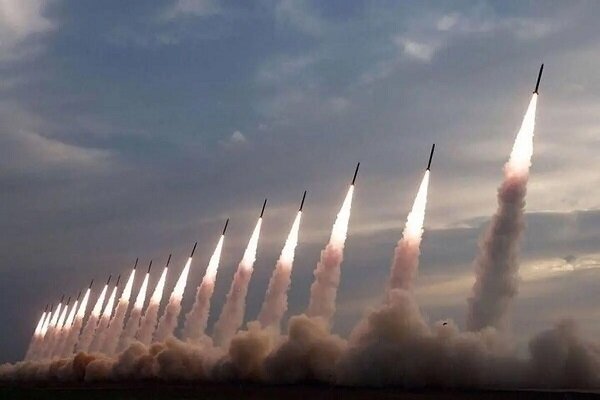
The “Sejjil” missile, one of the most significant achievements of Iran’s defense industry, utilizes solid-fuel technology and a two-stage design. According to an assessment by the Center for Strategic and International Studies (CSIS) in the United States, the missile has an estimated range of approximately 2,000 kilometers. The importance of solid fuel lies in its ability to reduce preparation time and enhance the operational mobility of the missile system—attributes that hold considerable significance within the calculus of deterrence.
Meanwhile, the Islamic Revolutionary Guard Corps’ (IRGC) recent announcement regarding the removal of the self-imposed 2,000-kilometer range limit on Iran’s missiles has sparked fresh discussions about the future capabilities of this defense sector. While this announcement does not confirm the deployment of an operational missile with a specific range exceeding 2,000 kilometers, it does signal a shift in the stated framework of Iran’s missile policy.
Failure of Military Pressure Strategy
The fundamental question is: why, even after large-scale military attacks against Iran, has the country’s missile capability remained a primary concern for the West? The answer lies in the nature of Iran’s deterrence strategy. A nation’s defensive strength is not measured solely by the number of enemy attacks or the extent of damage inflicted upon its infrastructure; rather, the ability to maintain a retaliatory capacity, sustain defense production, and impose costs on an aggressor are also critical components of national power.
Over the past few decades, despite sanctions and extensive international restrictions, Iran has pursued the development of indigenous missile technology. This trajectory has established missile capabilities as a cornerstone of the country’s defense strategy. Consequently, a military attack on Iran would not, in itself, equate to the destruction of its technological and industrial capacities.
In fact, one of the significant messages of recent developments for the West is that military means cannot be used to strip a nation of its right to possess defensive and deterrent capabilities. Furthermore, Iran’s security cannot depend on the will of powers that themselves have a long history of military intervention and threatening the country.
Europe: From Joining the Pressure to Worrying About the Consequences
Europe’s concern regarding Iran’s missile capabilities also reveals a significant contradiction in the foreign policy of European nations. On one hand, European governments have aligned themselves with Washington’s policies in many instances involving pressure on Iran; on the other, they express concern over the consequences of escalating military tensions in the region and the expansion of Tehran’s deterrent capacity.
Yet, Europe’s enduring security is inseparable from the security of West Asia. Aligning with policies that heighten the risk of war and instability cannot be without security consequences for European nations. Europe must recognize that undermining Iran’s security will not only fail to guarantee regional stability but could, in fact, expand the scope of the crisis.
From this perspective, concerns regarding the “Sejjil” missile must be examined within the broader context of power dynamics in the international system. Iran seeks to reinforce the message that its national security and territorial integrity are non-negotiable, and that any military threat must be weighed against the country’s capacity to retaliate.
Deterrence: A Guarantee against Return of Aggression
The reality is that Iran’s defensive power is not designed to initiate a war; rather, its primary objective is to increase the cost of any potential aggression and prevent its recurrence. No nation can be denied the right to develop its conventional defensive capabilities—especially when those very nations, along with their allies, possess the most advanced weapon systems and are expanding their own military presence in the region.
Therefore, the message behind Iran’s missile developments must be correctly understood by Europe and the United States: Iran’s security is a red line, and no foreign power can, by relying on its own military superiority, compel the country to accept insecurity.
Europe’s current concern regarding the “Sejjil” is not merely about a single missile; rather, it reflects a broader reality: despite extensive pressures and threats, Iran remains committed to developing its defensive capabilities and maintaining its deterrent power. Any calculation aimed at excluding Iran from the region’s security equations—without accounting for this reality—is bound to overlook one of the most significant components of power in West Asia.

