
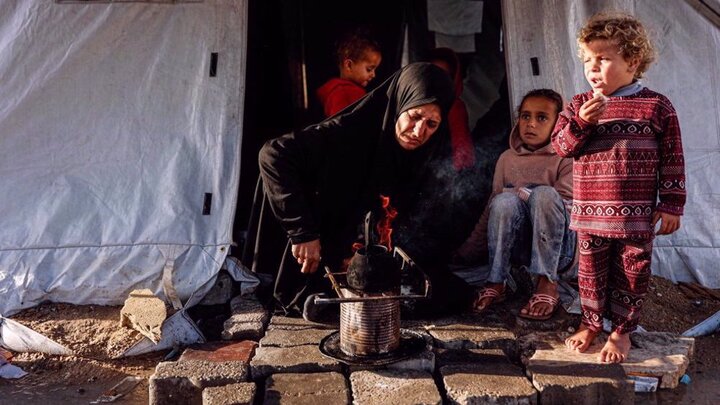
A large portion of Gaza’s population is living in tents or damaged buildings—shelters that offer no protection against rain, wind, or the winter cold. According to a report by a United Nations representative, restrictions imposed by Israel on the entry of winter supplies and aid—compounded by a lack of financial resources, exposure to cold and dampness, malnutrition, a dearth of medical facilities, flooding, the destruction of infrastructure, the inundation of displaced persons’ shelters, and the contamination of water sources with sewage—have led to an increase in respiratory illnesses, infections, and hypothermia, resulting in a higher mortality rate, particularly among children. In this regard, the following points are significant:
1.The current situation transcends a gross violation of human rights; under international law, it constitutes a war crime. While winter rain and cold weather are not, in themselves, war crimes, the deliberate and unlawful restrictions imposed by Israel on the entry of food, medicine, fuel, and shelter—or the use of starvation against civilians as a method of warfare—constitute not only a serious violation of human rights but also a war crime. A report by the UN humanitarian team (OCHA) dated November 13, 2026, emphasizes that the devastating consequences of the recent rainfall were not merely the result of a storm; rather, they were also driven by specific decisions and policies regarding humanitarian and operational matters.
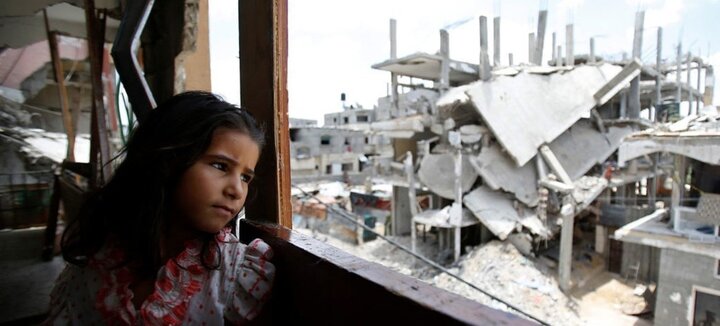
2. The current situation in Gaza threatens to deepen the crisis of displacement and homelessness; for the people of Gaza, winter risks becoming more than just a cold season—it threatens to act as a catalyst that further exacerbates the humanitarian catastrophe. According to the aforementioned report, rainfall and flooding have damaged or destroyed over 40,000 shelters; approximately 46,000 families have been affected by the heavy rains, and more than 9,000 shelters have been rendered completely unusable. Meanwhile, Israeli airstrikes, gunfire, and shelling continue in residential areas; between November 3 and 9, 22 Palestinians were killed and 90 were injured. On November 17, the International Organization for Migration (IOM) warned of an increased risk of child fatalities due to exposure to the cold, and confirmed the death of a nine-month-old infant from hypothermia.
3. Unfortunately, the coincidence of the winter crisis in Gaza with a U.S.-led war against Iran has diverted the attention of media outlets and governments away from the Palestinian issue; or, more accurately, the catastrophic situation in Gaza has been overshadowed and forgotten due to developments in the Persian Gulf. From this perspective, the primary danger is that Israel might exploit the U.S.-imposed war against Iran—and the resulting decline in global attention (as well as the reduced focus from Iranian officials themselves) toward the atrocities in Gaza and the suffering in the West Bank—to escalate its own crimes. In the current volatile climate, Israel—and Benjamin Netanyahu in particular—aims to shift the international community’s focus away from the occupation and crimes in Palestine toward the threats posed by Iran’s nuclear program.
Doing so diminishes international pressure on the Israeli regime regarding the necessity of maintaining a ceasefire in Gaza, facilitating the delivery of humanitarian aid, and halting the expansion of settlements. In effect, as Iran becomes the primary security priority for the United States, the Israeli government can leverage Washington’s strategic backing to pursue its criminal agenda in Gaza, framing itself not merely as an occupying power embroiled in the conflict with Palestine, but as a regime confronting major regional threats. In an analysis from October 2026, Reuters also noted this shift, observing that within Israel’s new security landscape, countering Iran has become the central pillar of the country’s strategic policy, while the prospect of establishing an independent Palestinian state has been pushed further to the margins than ever before.
.4 The Palestinian issue must not be allowed to become a peripheral matter in the foreign policies of nations worldwide, particularly those of Islamic countries. To counter this trend, the issue of territorial occupation and the rights of the Palestinian people must be consistently raised in United Nations sessions and international forums; the Palestinian question should be framed as a matter concerning the credibility of international law and the responsibility of the global community. Efforts must be made to ensure that Israel’s atrocities in Gaza become a central focus of intergovernmental negotiations and major international summits, ensuring that no political dialogue takes place without addressing the plight of the Palestinians. In this endeavor, the Islamic Republic of Iran should take the lead, maintaining its political and diplomatic initiatives in support of Palestinian rights—even while engaged in a legitimate confrontation with the United States. However, the responsibility for pursuing the Palestinian cause should not rest solely on Iran; Arab nations and the Organization of Islamic Cooperation (OIC) must work to forge a broad coalition—encompassing Islamic, Arab, African, Latin American, and European states, as well as other advocates for Palestinian rights—to oppose Israel’s crimes. The remarks made by the UN Secretary-General on September 22, 2026, are also significant; he highlighted the expansion of settlements, the displacement of Palestinians, and the threat posed by Israel to the viability of an independent Palestinian state, calling for the transition from political support to concrete, practical action. Building on this foundation, it is essential to leverage the mechanisms of institutions such as the International Court of Justice (ICJ), the International Criminal Court (ICC), the UN Human Rights Council, the UN General Assembly, and—most notably—the Organization of Islamic Cooperation. The latter should convene an emergency summit as soon as possible to address the dire situation facing the people of Gaza.
5. Practical measures against the Zionist regime could include the imposition of targeted, lawful sanctions on individuals responsible for serious violations of international law; a ban on the import of products manufactured in illegal settlements; a review of military and security cooperation between various nations and Israel; the cessation of economic ties; the pursuit of individual accountability for perpetrators of war crimes; and the removal of their political immunity. Addressing the humanitarian crisis in Gaza must become an urgent global priority, with global public opinion focused on the situation. The question of Palestine will become a top global priority only when support for Palestinian rights evolves from mere sympathy and moral posturing into a sustained, binding policy within international relations. Through a global initiative—titled “A Winter Without Death in Gaza”—it is possible to amplify the public demand for governments to defend the Palestinian people, supported by professional, evidence-based information.
Ultimately, the responsibility of Islamic nations—especially Iran, which stands at the forefront of defending the Palestinian people—demands that they play an effective role in ensuring that the continued occupation, the atrocities in Gaza, and the violation of Palestinian rights carry a heavy political, economic, and legal cost for Israel.

